Developing Communication Skills for Veterinary Practice.
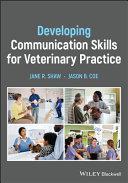
Autoři ve své publikaci poskytují důkladnou průpravu v praktických komunikačních principech pro interakce s klienty a týmy a pomáhá veterinářům a personálu posunout své komunikační dovednosti na další úroveň prostřednictvím seberozvoje a koučování kolegů. Kniha popisuje specifické techniky založené na důkazech. Uvádí příklady jejich použití a ukazuje, jak používat každou dovednost v klinickém prostředí, s učebními aktivitami, které se uvádějí do praxe. Pokrývá všechny způsoby komunikace, včetně osobní, virtuální, telefonické a písemné komunikace.
Každá kapitola je organizovaná podle úkolů, představuje specifické komunikační dovednosti. Kniha představuje soubor komunikačních nástrojů 20 klíčových komunikačních dovedností, které lze aplikovat na jakoukoli oblast veterinární praxe nebo veterinární kariéry.
Publikace definuje každou komunikační dovednost, demonstruje techniky a poskytuje příklady.
Zdůrazňuje důležitost efektivní komunikace s klienty a kolegy.
Poskytuje proces a strukturu pro koučování komunikace s kolegy.
Popisuje interakce klientů a týmů pomocí mnoha metod, včetně osobních schůzek, telefonních rozhovorů a e-mailů.
Nastiňuje osvědčené postupy pro efektivní komunikaci pomocí technologií.
Rozvoj komunikačních dovedností pro veterinární praxi je neocenitelným zdrojem pro veterinární profesionály na jakékoli úrovni, kteří se snaží rozvíjet své komunikační dovednosti a zlepšit klinické výsledky.
Autoři: Jane Shaw, DVM, PhD, je profesorkou na katedře klinických věd na College of Veterinary Medicine and Biomedical Sciences, Colorado State University ve Fort Collins, Colorado, USA.
Jason Coe, DVM, PhD, je profesorem na katedře populační medicíny na Ontario Veterinary College, University of Guelph, v Guelphu, Ontario, Kanada.
Autor: Jane R. Shaw, Jason B. Coe
| Nakladatel | Wiley-Blackwell |
|---|---|
| ISBN | 9781119382713 |
| Vydání | 04/22/24 |
| Vazba | brožovaná |
| Počet stran |
Developing Communication Skills for Veterinary Practice provides a thorough grounding in practical communication principles for client and team interactions, and helps veterinarians and staff take their communication skills to the next level through self-development and coaching colleagues. The book describes specific evidence-based techniques, gives examples of their use, and demonstrates how to use each skill in the clinical setting, with learning activities to put into practice. It covers every mode of communication, including face-to-face, virtual, telephone, and written communication.
Organized by the tasks of the clinical appointment, each chapter showcases specific communication skills. The book introduces a communication toolbox of 20 key communication skills, which can be applied to any area of veterinary practice or veterinary career path. The book:
Defines each communication skill, demonstrates techniques, and provides examples
Emphasizes the importance of communicating effectively with clients and colleagues
Provides a process and structure for coaching communication with colleagues
Discusses client and team interactions using many methods, including in-person meetings, telephone conversations, and emails
Outlines best practices for effectively communicating using technology
Developing Communication Skills for Veterinary Practice is an invaluable resource for veterinary professionals at any level seeking to develop their communication skills and improve clinical outcomes.
TABLE OF CONTENTS
Acknowledgements
About the Authors
How to Use this Book
Chapter 1 - Introduction
Chapter 2 - Communication Styles
Chapter 3 - Opening the Interaction
Chapter 4 - Information Gathering
Chapter 5 - Attending to Relationship
Chapter 6 - Attending to Task
Chapter 7 - Diagnostic and Treatment Planning
Chapter 8 - Closing the Interaction
Chapter 9 - Communication Coaching
Chapter 10 – Transferring the Skills
Chapter 11 – Now What
Appendix 1 20 Communication Skills
Appendix 2 Skills Checklist
Appendix 3 Coach Process Card
| About the Authors | xiii |
| How to Use This Book | xv |
| Acknowledgments | xviii |
| 1 Introduction | 1 |
| Communication Matters | 1 |
| Equip Your Communication Toolbox | 2 |
| Practice, Practice, Practice | 3 |
| Appreciate Communication is An Art and a Science | 4 |
| Build, Maintain, and Sustain Relationships | 4 |
| Enhance Clinical Outcomes | 5 |
| Foster Veterinary Team Culture | 8 |
| Make Time to Communicate | 9 |
| Answer Key | 10 |
| References | 10 |
| 2 Communication Styles | 12 |
| Introduction | 12 |
| Set the Scene | 14 |
| Adapt Communication Styles to Clients | 14 |
| Put the Communication Styles into Practice | 26 |
| Take It Away | 29 |
| Answer Key | 29 |
| References | 29 |
| 3 Opening-the-Interaction | 31 |
| Introduction | 31 |
| Set the Scene | 32 |
| Opening Client Interactions | 33 |
| Opening Team Interactions | 41 |
| Put the Opening Skills into Practice | 43 |
| Take It Away | 46 |
| Answer Key | 46 |
| References | 48 |
| 4 Information- Gathering | 49 |
| Introduction | 49 |
| Set the Scene | 51 |
| Gather Patient, Client, and Environment Information | 52 |
| Gather Situation, Colleague, and Environment Information | 72 |
| Put the Information- Gathering Skills into Practice | 76 |
| Take It Away | 79 |
| Answer Key | 80 |
| References | 80 |
| 5 Attending to Relationships | 82 |
| Introduction | 82 |
| Set the Scene | 83 |
| Attend to Client Relationships | 84 |
| Attend to Team Relationships | 93 |
| Put the Relationship Skills into Practice | 94 |
| Take It Away | 96 |
| Answer Key | 97 |
| References | 97 |
| 6 Attending to Tasks | 98 |
| Introduction | 98 |
| Set the Scene | 100 |
| Attend to Client Tasks | 101 |
| Attend to Team Tasks | 108 |
| Put the Task Skills into Practice | 111 |
| Take It Away | 113 |
| Answer Key | 113 |
| References | 113 |
| 7 Diagnostic and Treatment Planning | 115 |
| Introduction | 115 |
| Set the Scene | 117 |
| Plan with Clients | 117 |
| Plan with the Team | 143 |
| Put the Planning Skills into Practice | 145 |
| Take It Away | 150 |
| Answer Key | 150 |
| References | 151 |
| 8 Closing-the-Interaction | 155 |
| Introduction | 155 |
| Set the Scene | 157 |
| Closing Client Interactions | 158 |
| Closing Team Interactions | 161 |
| Put the Closing Skills into Practice | 163 |
| Do- It- Yourself Exercises | 163 |
| Take It Away | 164 |
| Answer Key | 164 |
| References | 164 |
| 9 Communication Coaching | 165 |
| Introduction | 165 |
| Set the Scene | 168 |
| Attend to the Process of Communication Coaching | 168 |
| Attend to the Content of Communication Coaching | 182 |
| Commonly Asked Questions Related to Communication Coaching | 183 |
| Colleague Scenario | 185 |
| Team Scenario | 186 |
| Talk Through Technology – Video- Recording | 187 |
| Put the Coaching Skills into Practice | 189 |
| Take It Away | 190 |
| Answer Key | 191 |
| References | 191 |
| 10 Transferring the Skills to Various Contexts | 193 |
| Introduction | 193 |
| Scenarios | 194 |
| Client Conversations | 194 |
| Team Conversations | 205 |
| Take It Away | 213 |
| References | 214 |
| 11 Now What? | 216 |
| Twelve Recommendations | 217 |
| Put the Communication Skills into Practice | 218 |
| Take It Away | 224 |
| References | 224 |
| Appendices – Tools to Support Coaching and Communication Skills Learning Sessions | 225 |
| Appendix A: 20 Communication Skills | 226 |
| Appendix B: Coaching Process Card | 229 |
| Appendix C: Communication Skills Checklist | 233 |
| Index | 235 |